By Tamra Fakhoorian
There is a strange point in building an audience where the numbers start improving, people are commenting more, and you begin to think, Okay, maybe this is turning into something.
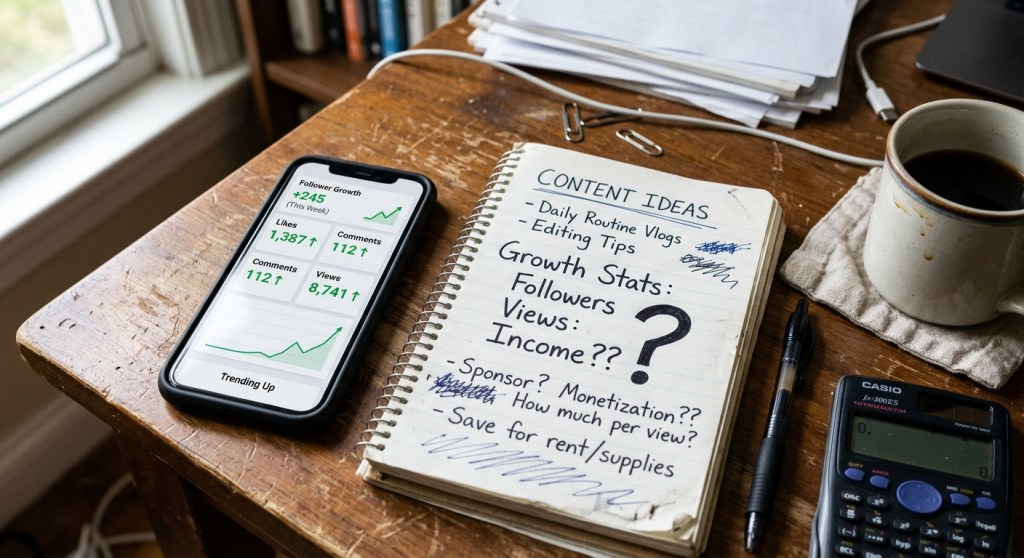
That happened to me on TikTok. My early videos might get 30 or 40 views. After I had posted for a while, I was more often seeing 500 to 1,500 views, and the comments were growing too. I could tell I was getting better at it.
And there was another thing keeping me going: the little rush every time a video did well.
A new batch of likes. More comments than usual. Somebody sharing a video. A few more followers. It is surprisingly easy to start checking your phone just to see whether the numbers moved again.
That little dopamine hit is part of the attraction. It feels like progress.
Sometimes it is. Sometimes it is just feedback.
What I could not tell was whether I was building toward anything that could eventually make money.
That is a very different question.
Growth Can Feel Like Proof
When an audience is growing, it is easy to assume monetization will show up eventually.
That was more or less my thinking. I enjoyed making travel videos, people were responding, and I could imagine reaching a point where the income helped pay for the travel itself. That would have thrilled me.
But the money part was still vague. I figured if I became influential enough, opportunities would eventually start coming my way.
Meanwhile, every increase in views or followers reinforced the feeling that I was on the right track.
That is where the numbers can fool you.
A growing account may mean you are getting better at making content. It may mean you have found something people enjoy. It may mean the platform decided to show one video to more people.
None of those automatically means you are building a business.
What Are People Actually Responding To?
This is where I think you have to stop looking at the total audience and start looking at behavior.
Which posts get noticeably more comments? Which ones get shared or saved? Which subjects bring new followers? What do people ask you about afterward? Which posts make people tell you some version of, “I want to know more about this”?
Those clues start showing you why people are there.
In my case, some people genuinely loved the unusual travel experiences. Some followed because we had developed an online friendship. And plenty were part of the follow-for-follow world, where everybody was trying to grow at the same time.
All of those people counted as followers. They did not all mean the same thing.
Followers Can Be Noisy Data
That is especially important if you have used follow-for-follow.
You follow me, I follow you, and both numbers go up. It can feel great when you are starting out, especially when every new follower gives you another little jolt of encouragement.
But it can also make it harder to tell what your audience actually wants.
If 1,000 people followed mainly because you followed them first, their presence tells you very little about your content. You have to look past the number and see whether they actually watch, comment, return, ask questions or care about the subject.
Otherwise you may think you have built a niche when what you have really built is a collection of reciprocal follows.
Can You Keep Making What They Came For?
I ran into another problem I had not thought through.
My most interesting content came when I was traveling. I would end up somewhere unusual, find myself in some strange or beautiful situation, document it and share it. That part came naturally.
Then I would come home.
Suddenly I did not have a temple, market, mountain road or odd encounter sitting in front of me. My life got quieter, and so did my ideas.
That matters if you are trying to build something around content. It is not enough to find a topic people like. You also need to ask whether you can produce that kind of content consistently enough to keep the audience alive.
A niche that only works part of the year may still be useful. But you need to know that before you build your whole income plan around it.
Ask Better Questions
If I were trying to understand an audience now, I would not ask a broad question like, “What do you want to see from me?”
I would make the choices more specific.
If I had a travel audience, for example, I might ask whether people wanted more unusual destinations, practical travel advice, stories about what went wrong, how I paid for the trips, or what it was like traveling alone.
Then I would watch what happened when I posted each kind of content.
The answers people give are useful. What they actually click, watch, save and return for is even more useful.
Look for Patterns, Not One Big Hit
One viral post can be exciting, but it can also confuse things.
If one funny video suddenly takes off, the dopamine hit is enormous. You may think, This is it. I finally figured it out.
Maybe you did.
But if none of those viewers care about anything else you make, the spike may not tell you much about the audience you are actually trying to build.
I would be more interested in repeated signals.
If every time you talk about one subject the comments jump, people start asking follow-up questions and new followers arrive, that is worth paying attention to.
You are looking for a pattern that says, “People consistently care when I talk about this.”
That is much more useful than one lucky spike.
Then Ask Whether There Is an Income Path
Once you begin to understand what people want from you, then you can ask whether there is a sensible way to make money around it.
Maybe the audience is interested in something that connects naturally to affiliate products. Maybe they would pay for a guide, a newsletter, a class or a service. Maybe advertisers would eventually want access to that audience.
Or maybe you discover that people love the content but there is no obvious commercial opportunity.
That is useful information too.
It is better to learn that while you are still experimenting than after spending a year chasing likes, comments and follower milestones because they felt like proof that a business would eventually appear.
The Bottom Line
If your audience is growing, enjoy it. Those likes and comments are fun. They can also be useful feedback.
Just do not confuse the dopamine hit with validation of a business model.
Look at what people repeatedly respond to, what they ask for, what brings them back and whether you can keep producing the thing they came for. Then see whether there is a natural path from that interest to income.
You do not need to know the entire business model on day one.
But you should eventually be able to answer one question:
What am I building toward?
 Pin Money
Leave a comment